Three is one of the Nine temperaments that are naturally present in us: everyone has equal access to each of these nine temperaments. It may be that your personality puts more or less focus on some of them.
The Enneagram describes nine archetypal ways in which people experience themselves and the world. Within each point lies an Essence: a natural quality we don't have to earn -it is our birthright. In the previous essays I explored the points Eight (Life Force), Nine (Engagement/Unity), One (Serenity) and Two (Humility). This essay is about Point Three and how our personality structure, as a survival mechanism, turns it into Enneagram pattern Three. We thus distinguish between the distortions of the personality and the ‘Pure Gold’ of the Essence. The essence of Three is closely connected with TrueHope and Truthfulness – the trust that life supports us when we are true to our real self, and the willingness to speak and embody the truth without image or façades.
I explore the following elements:
Essence – Pure Gold: an exploration of the original qualities of Three, including self-worth, purpose, manifestation and authenticity.
Examples from nature and the universe: how we find these qualities in natural phenomena.
Pure Fixation: how our personality tries to imitate these qualities and thereby tips over into self-deceit, vanity and overachieving.
The path to Authenticity: reflections on how Enneagram Three can evolve from (self-)deceit to the essence of Point Three through Authenticity, Truthfulness and Hope.
Essence – Hope and Truthfulness as Pure Gold
Personal Essence and Holy Idea
The essential quality of Point Three is referred to as the Personal Essence or Personal Presence –a sense of vibrant, fully present being-energy that permeates our unique self. A.H. Almaas describes this quality as a bubbling, personal presence that is “full, effervescent and sparkling” and gives a feeling of essential worth. The personal essence is not about achievements, but about the intrinsic value of existence: you are valuable simply because you exist. When we are in contact with this essence, we experience ourselves as authentic and complete: action flows effortlessly from this contact instead of from a drive to prove something.
A Holy Idea is also linked to this personal essence, a kind of mental concept –in the case of Three it is Holy Law or Holy Hope. This idea refers to the realisation that the universe runs according to its own intrinsic lawfulness: everything unfolds at the right moment and according to a natural rhythm. We don't have to make or force life. There is hope because we are part of a greater whole. Dirck Cloete of Integrative Enneagram Solutions puts it like this: the Holy Law makes us aware that the world organises itself and that we ‘only have to play our part’ without bending the laws to our will. It is an invitation to trust. Holy Hope adds an existential conviction to this that it will be all right, regardless of our achievements -we are worthy because we are part of life and not because of what we do.
Alongside this holy idea lies the virtue of Point Three: Truthfulness or Veritas. According to David Daniels, the passion of Enneagram Three consists of Deceit or self-deception –the tendency to create an image and obscure the truth in order to be accepted– while the virtue is Veracity: total honesty and transparency. When the body relaxes into the essence, it naturally becomes ‘lax about deceit’ and only pure truthfulness remains. The quality of Hope and Truthfulness ensures that Three trusts reality and at the same time stays true to what is true.
Facets of Pure Gold
When Enneagram Three is in contact with these essential dimensions, various facets of their Pure Gold emerge. Over the years I have gathered, from literature, teachings by Enneagram experts worldwide and my own observation and insight, a series of qualities that reflect the Gold of Point Three in each of us. I name a few:
True Worth – the inner experience that you are meaningful and valuable, regardless of achievements or recognition. In essence there is a deep awareness of worth that your existence is in itself of value.
Purpose / Destiny – an innate sense of purposefulness that doesn't come from an agenda but from resonance with the greater whole. Holy Law reminds us that there is a universal flow -from that flow we intuitively know what is right at this moment.
Awareness of Worth – the natural capacity to recognise the true potential in yourself and others. Instead of comparing or competing, you see everyone's unique contribution.
Creation and Glory – in our essence we are creative and expressive -we feel able to manifest something new and let our talents shine without showing off. It feels like ‘glory’ when life flows through us, not because we seek glory, but because the beauty of creation becomes visible.
Essential Capacity – an inexhaustible reservoir of talent and energy that emerges effortlessly when you are absorbed in your activity. That effortlessness is characteristic of our Personal Essence.
Authentic Radiance & Effortless Functioning – when we are not occupied with image, a natural radiance shines -acting feels self-evident, there is no sense of having to. The ego doesn't need to exaggerate anything because the worth is visible all by itself.
Manifestation & True Self – the power to realise ideas or desires from the true self, rather than from behind a mask. Deeds are congruent with inner truth.
Activity & Gifts – pure vitality and talent are put in the service of something greater. Our gifts emerge clearly without a hidden agenda.
Meaning & Adaptability – every project or goal has an intrinsic meaning -there is flexibility to adjust what doesn't work. In our natural state we are productive and combine this with rest and reflection.
Life Light & Resourcefulness – an inner spark that feeds creativity and resourcefulness. This lightness makes solutions present themselves all by themselves.
Self-development & Realisation – the continuous growth that comes from authenticity -not to create an image, but to realise what you can uniquely contribute.
Giving & Dynamism – In essence we share our energy and dynamism with the world in a way that inspires others, without needing recognition or applause.
These facets make it clear that Point Three is in essence about being truthful and giving your unique contribution in the trust that the universe supports you. It is a movement from the inside out in which authenticity and true hope (as opposed to the ‘false hope’ from a narrative in your personality structure) are central.
Natural examples of authenticity, creation and hope
Nature offers various examples of how authentic manifestation, clever adaptation and trust in the process work. While animals don't have an ego as we do, their behaviours do illustrate principles of creation, adaptability and truthfulness that resonate with Point Three.
Bowerbirds: authentic creation and personal style
The great bowerbird is known for building ingenious ‘courtship stages’. The male sets up a bower -an arbour- of sticks and decorates it with pebbles, bones and coloured objects in a geometric pattern. Researchers discovered that bowerbirds even use perspective techniques: they place larger objects further away, so that the bower looks roughly the same from every point. This is an example of creative self-expression –the male expresses his unique style without imitating anyone. Interestingly, when scientists adjust his design to improve the perspective, the male returns to his original pattern. This shows loyalty to his own vision. For Enneagram Three this is an instructive metaphor: authenticity and creation flourish most when we follow our inner blueprint instead of striving for a perfect exterior.
Cephalopods: adaptive ability and camouflage
Octopuses and cuttlefish are masters of rapid transformation. Thanks to thousands of chromatophores they can change colour and pattern in a fraction of a second, and thanks to muscular papillae they can make their skin rough or smooth. The mimic octopus goes one step further by imitating the shapes and movements of other animals, such as venomous sea snakes or lionfish. These abilities are used to survive: camouflage or imitation helps protect against predators. In the context of Point Three, cephalopods show how adaptation and shape-shifting can be a natural response to the environment. However, where the octopus uses it to survive, Enneagram Three (the personality structure as a defence strategy) sometimes uses this mechanism to put an image out there. The lesson here is subtle: adaptation is healthy when it serves survival and not the ego. The mimic octopus finds safety by imitating an honest signal (venomousness): Enneagram Three sometimes uses similar ‘masks’ to gain appreciation. But a mask protects, it doesn't evoke real love. The evolution of Three therefore calls for awareness of when the ‘colour change’ is needed and when authentic colour matters more.
Authentic birdsong and personal call
Many songbirds develop a unique ‘signature’ in their call and sing songs that set them apart. They do learn the call of their species, and at the same time add personal variations. That strengthens the call to attract partners and mark boundaries. This can serve as a metaphor for Enneagram Three learning to know their own voice. Real creation and connection come from attunement to natural laws and authenticity. When we trust that our environment supports us, we can share our talents without wondering how it looks. In nature there is no façade –only life itself expressing itself.
Photosynthesis – life light and creation
Plants and algae use sunlight to make oxygen and sugar from water and carbon dioxide. Chlorophyll molecules capture light energy and convert it into chemical energy, which is stored in glucose. This simple, elegant chemistry feeds almost all life on earth. It is a reminder that creation doesn't have to be forced: life arises from capturing light and sharing it with others.
Aurora – dance of energy and light
In the polar regions, charged particles from the solar wind collide with oxygen and nitrogen in the upper atmosphere, creating magnetic veils of light that we call aurora. When the solar wind is stronger, the auroras become more intense and can even reach lower latitudes. This light show is a manifestation of cosmic energy showing its beauty unfiltered, without having to serve a purpose –just as the essence of Three contains an inner ‘life light’ that shines all by itself.
Star formation – cosmic creation
Stars are born when parts of gigantic clouds of gas and dust collapse under their own gravity. Collisions between clouds or shock waves from supernovae can initiate these collapses. The shrinking clouds form protostars and around them protoplanetary discs arise from which planets later form. This process of creation and manifestation takes place without human intervention –the universe produces stars and worlds according to an inner law. A reminder for Enneagram Three that our creativity too is birthed from a deeper source, not through endless effort.
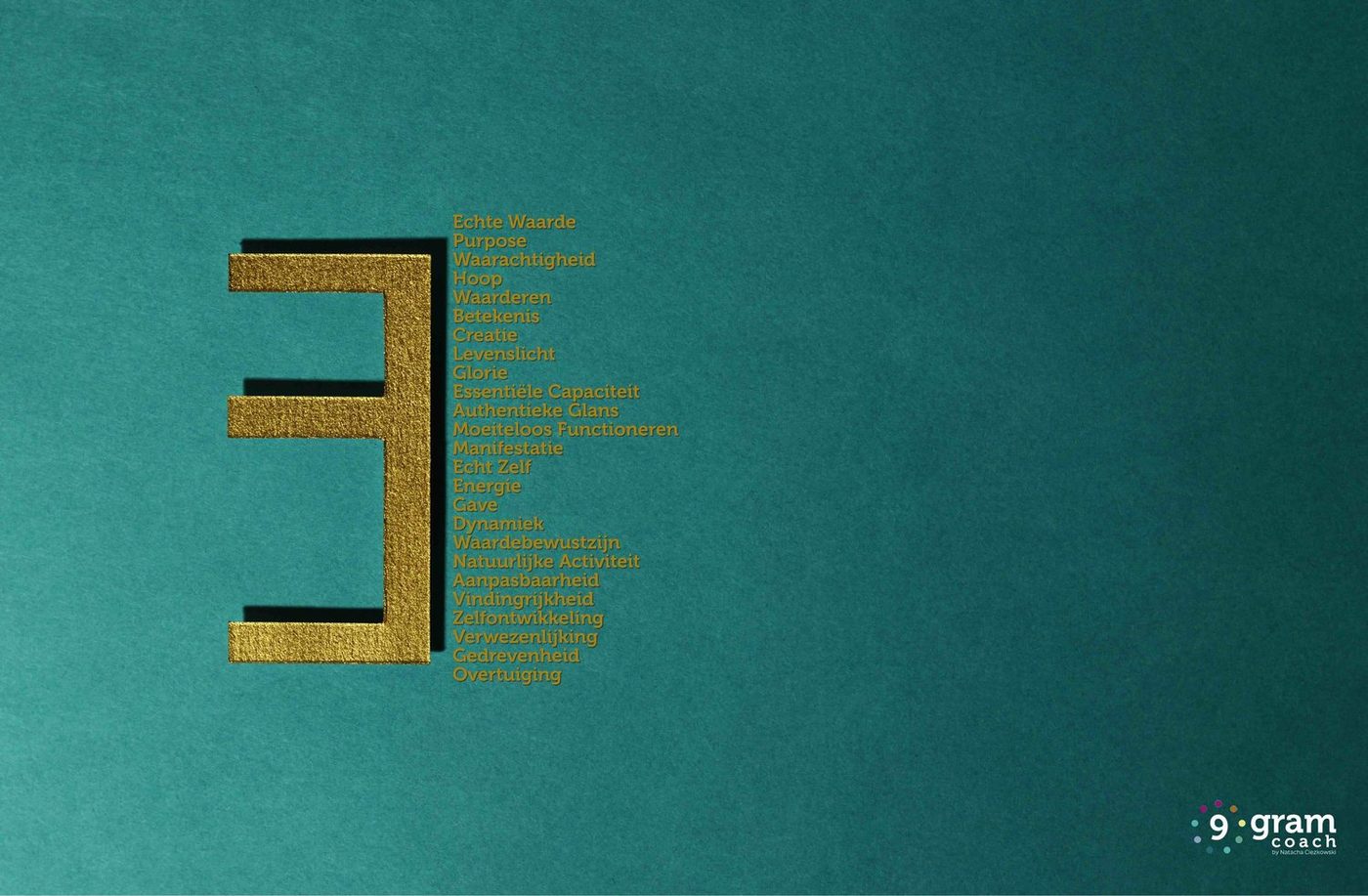
✪ True Worth ✪ Purpose ✪ Truthfulness ✪ Hope ✪ Appreciating ✪ Meaning ✪ Creation ✪ Life Light ✪ Glory ✪ Essential Capacity ✪ Authentic Radiance ✪ Effortless Functioning ✪ Manifestation ✪ True Self ✪ Energy ✪ Gift ✪ Dynamism ✪ Awareness of Worth ✪ Natural Activity ✪ Adaptability ✪ Resourcefulness ✪ Self-development ✪ Realisation ✪ Drive ✪ Conviction ✪
Rivers – flow and energy
Rivers are flowing channels of water that connect land and sea and form an essential part of the hydrological cycle. The water flows thanks to gravity, replenishes streams and carves out landscapes, creating fertile valleys and deltas. This permanent flow gives life to ecosystems and human existence. Rivers symbolise the flow in which energy and nourishment move freely: they show that movement and change are natural forces we can trust.
These phenomena show that light, energy, creation and flow exist all around us. They reveal that manifestation is not something we have to force: the sun gives light, stars are born, rivers flow and plants grow simply because the conditions are right. Just as the Personal Essence of Three has an intrinsic drive to create and to shine, nature invites us to trust the inner source from which authenticity and hope spontaneously arise.
Pure Fixation – Self-deceit and Vanity
Where the Essence of Three is about true worth and authentic manifestation, the Enneagram pattern tries to create these qualities through achievement and image. The Enneagram names this (Self-)deceit and Vanity. The personality believes that love and acceptance have to be obtained by being successful and admirable. This leads to a number of characteristic behaviours and thought patterns that, paradoxically, take Enneagram Three further from the essence.
Core mechanism: self-image and efficiency
Enneagram Three idealises ‘appearing competent and successful’ and develops an ego fantasy: “how do I come across to others?”. The underlying compulsion is self-deception: the belief in a separate ‘doer’ self that has to get everything done and is in control. From this illusion the personality continually strives for efficient action (the ego trap here: the ‘idolising’ of efficiency). An image is built up to satisfy the outside world. The defence mechanisms are identification and imitation: Threes adopt camouflaging behaviour (the “chameleon”), so that they fit the desired role. David Daniels describes this tendency towards self-deception as the passion Deceit, in which Threes mislead themselves and others in order to live up to their ‘successful’ image.
Riso & Hudson describe how this plays out in practice as follows:
Image-conscious and vain – Enneagram Three builds the self-image around status, achievements and recognition. They can adapt to expectations like chameleons, become obsessed with the outside and derive their identity from success, with the fear of being ‘nothing’.
Overly focused on success – Enneagram Three has a strong tendency towards workaholism and keeps going even at the expense of relationships and health. The drive to be productive numbs their emotional life: feelings are denied or postponed.
Competitive and driven – To feel valuable, Enneagram Three tries to outdo others. They show competitiveness, take risks, cut corners and focus on quick results. Their short-term focus can come at the expense of depth.
Manipulation and self-promotion – Enneagram Three presents themselves in an exaggeratedly positive light to harvest admiration, using charm and success stories to impress. David Daniels calls this ‘manipulating others to win admiration’. There can be superficiality and hypocrisy.
Loss of authenticity – Enneagram Three denies or conceals vulnerability out of fear that it doesn't fit their image. They are evaluated on achievements, not on their true self. This leads to emotional disconnection: denying feelings and always just carrying on. David Daniels adds that their “mental preoccupation is vanity,” the fixation on how they look.
Impatience and harshness – Enneagram Three quickly becomes frustrated when others work less efficiently or when tasks don't go fast enough. They can become hard and show little empathy for slowness, which harms relationships.
Insincerity and self-deceit – Because everything revolves around image, Enneagram Three comes to believe in their own façade. They tell half-truths to seem more successful and think they actually are that person, until they get stuck and no longer know who they really are. This is the paradox of Three: the desire to come across as authentic, and at the same time losing contact with the truth.
What lies hidden beneath the fixation
Beneath all these behaviours lie deeper beliefs: that love is conditional, that your worth depends on achievements and that you are only something if you do something. Enneagram Three avoids the feeling of emptiness and nothingness by filling themselves with work and goals. Their greatest fear is to be seen as ‘worthless’ or ‘superfluous’. This fear leads to constant action, perfectionism and, naturally, fear of failure. The Enneagram Institute summarises their basic fear as ‘earn love by being successful’. As a result Enneagram Three is often unconsciously sad and lonely, even though on the outside they seem busy and successful.
The path from Self-deceit to Authentic Hope
The transformation of Enneagram Three consists of letting go of image and allowing truthfulness and hope. It is a movement from doing to being: your worth no longer feels dependent on achievements but on your essence. Below are some reflections and steps that mark the path to balance:
Recognise your motivation – Ask yourself questions such as: When do I feel valuable and what do I make that depend on? What am I not showing because it doesn't fit my successful picture? What happens if I stop doing and simply am? These questions help you see when you are locking yourself into a role.
Listen to your body and feelings – Enneagram Three often ignores their own emotions in order to stay productive. By slowing down and feeling the body, you can recognise the discrepancy between who you are and what you do. Allow yourself to experience vulnerable moments and practise parking your need for perfection.
Dare to do less – Combine productivity with rest and reflection. A healthy Enneagram Three schedules moments of rest and seeks connection. By allowing pauses, authenticity can rise to the surface and the ego doesn't have to constantly prove success.
Be honest about your intentions – Speak honestly about your motivations and stop twisting stories. Allowing vulnerability and acknowledging your own mistakes builds trust. David Daniels emphasises that virtuous honesty (veracity) is the path to freedom.
Develop holy hope – Trust that your worth does not depend on external confirmation and that life supports you. Holy Hope invites us to take a step back and see that the universe organises itself. You don't have to force: there is a natural timing for everything.
Find your own voice – Just as bowerbirds build a unique bower and songbirds develop their own song, you can find your own style of working and creating. Don't let yourself be guided by trends or what earns admiration, but by what resonates in your heart.
Let nature mirror you – Observe nature and animals to be inspired by natural creation, manifestation and authenticity. There is a trust in natural signals, patterns and laws. Practise letting go of control and let yourself be guided by intuitive knowing instead of external image.
Choose connection over competition – Nature teaches us that in symbiotic relationships both species get what they need. Practise co-creation: let others share in successes and appreciate their qualities. By being sincere and serving rather than competing, you actually feel more connected.
These steps remind Enneagram Three that our worth lies not in doing, but in being. By integrating hope and truth, a life opens up in which achievements arise from joy instead of compulsion. Allowing ourselves to fail, to slow down and to be honest makes room for creativity and inspiration.
Closing reflection
Point Three teaches us that real worth and success come not from façade or endless productivity, but from authenticity and trust. The Personal Essence –a bubbling, personal presence that holds our unique gifts– is the source of our worth. Holy Law and Holy Hope invite us to see that the universe unfolds by itself: we don't have to work ourselves to the bone to earn love. When we accept this deep truth, we no longer need to build an image. Instead we follow our natural calling and let our creativity flow, as bowerbirds make their artistic constructions or auroras show their beauty unfiltered without having to serve a purpose.
The personality of Enneagram Three –with a drive for status, image and self-deceit– is a mechanism to avoid feeling our vulnerability. Just as the mimic octopus adapts its form to protect itself, we can learn when masks are needed for self-protection and when we may let them drop. By looking honestly at our motivations and being open to feedback, we transform vanity and deceit into truthfulness. We discover that our true self adds value effortlessly, without us losing our identity in it. Ultimately, Point Three invites us to trust hopefully and live truthfully -then room arises for true glory. Not because we pursue it -purely and simply because we may let our essence shine.
Sources:
Almaas, A. H. (2002). Facets of Unity: The Enneagram of Holy Ideas. Shambhala Publications.
Boudreau, Diane. McDaniel, Melissa. Sprout, Erin. Turgeon Andrew. (2023, 19 October). Aurora. National Geographic Society.
Brown, Tyson. (2025, 26 February). Photosynthesis. National Geographic Society.
Cloete, Dirk. Nine Holy Ideas – Holy Law & Holy Hope (Type 3). Integrative9
Cloete, Dirk. Enneagram Type 3 – The Achiever. Integrative9
Daniels, David N. Type 3: The Achiever – Deceit and Veracity. DrDavidDaniels.
Diamond Approach / Ridhwan. Enneagram Type 3. Diamond Approach
Franknoi, A., Morrison, D., & Wolff, S. (2016). Star Formation (Astronomy). Open Maricopa / OpenStax.
Osterloff, Emily. Mutualism: Eight examples of species that work together to get ahead. Natural History Museum.
Quaglia, Sofia. (2024, 16 May). These are the weird and wonderful reasons octopuses change shape and color. National Geographic Society.
Riso, Don & Hudson, Russ. Type Three – The Achiever. Enneagram Institute.
Rutledge, Kim, McDaniel, Melissa & others. Understanding Rivers. National Geographic Society.
Yong, Ed. (2010, 9 September). Male bowerbirds create forced perspective illusions that only females see. National Geographic Society.