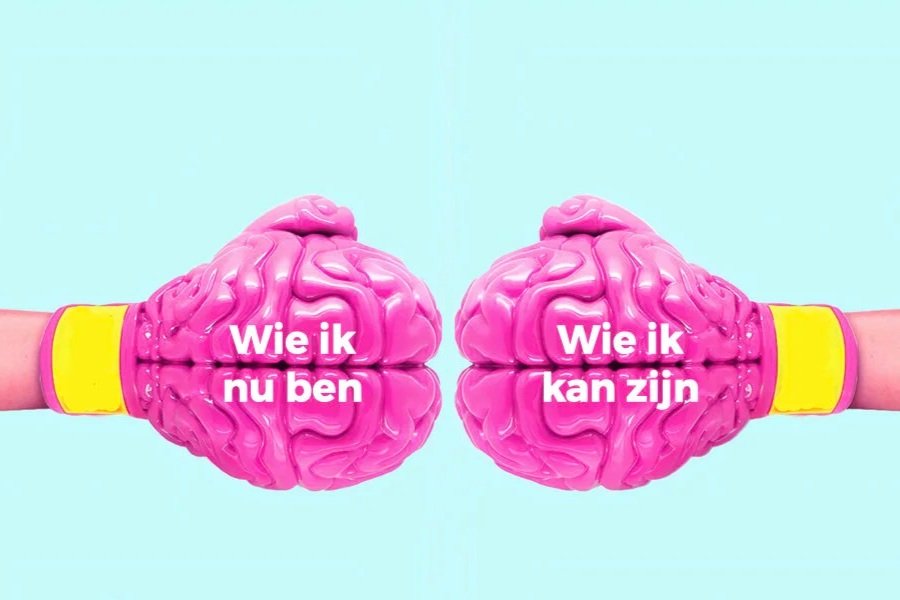
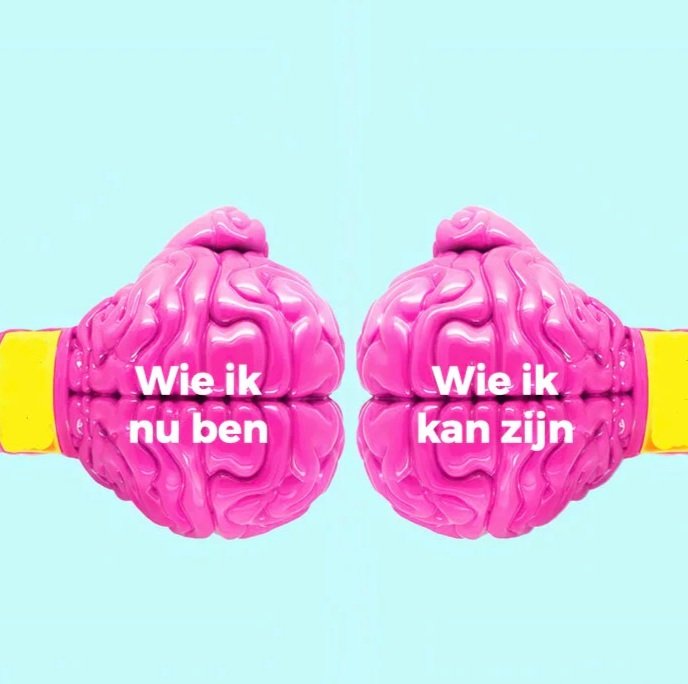
What you tell your brain constantly changes your neurological programmes. And while your brain keeps ‘renewing’ itself in the background thanks to feedback from your senses, it also sends that feedback back - a ‘continuous feedback loop’. A troubling thought here: we have become what programmed us, not who we can become … So ask yourself the following question; Who are you, really?
It's not your genes, it's your programmes
Although people long believed otherwise, it is not your genes that determine your future. Perhaps you too still think today that the genes you were born with largely determine the life you lead and your future ... Scientists discovered that your genes are not a ‘map’ but more of a ‘blueprint’. What's more, we now know that your genes work like ‘switches’: they are turned off or on by your perception of your environment, in this case by your thoughts. Thoughts can therefore flip the chemical switches on your DNA on or leave them off.
In other words: we steer our genes, not the other way round. It isn't the case that one person is born with a gene for becoming happy while another has to go through life unhappy. Genes don't determine what we enjoy, how we dress or which music we like to listen to. That is determined by your neurological programmes. The same applies to beliefs, habits and opinions. Very few of them truly originate with us; most we have ‘borrowed’ from somewhere. All these seeming certainties were once stored in your brain, unconsciously, and through the neurological connections that formed, they became your truth.
So what makes one person more successful than another?
The big difference is ‘self-talk’. What do you say to yourself? It isn't luck or fate; it's the way you programmed yourself from the very beginning of your life to succeed, or not, later on. Neurological connection after neurological connection, programme after programme, one person was on the road to happiness and the other to failure.
Essential to understand: in principle, both individuals had the same potential at birth ...
Free yourself from the box of your neurological programmes
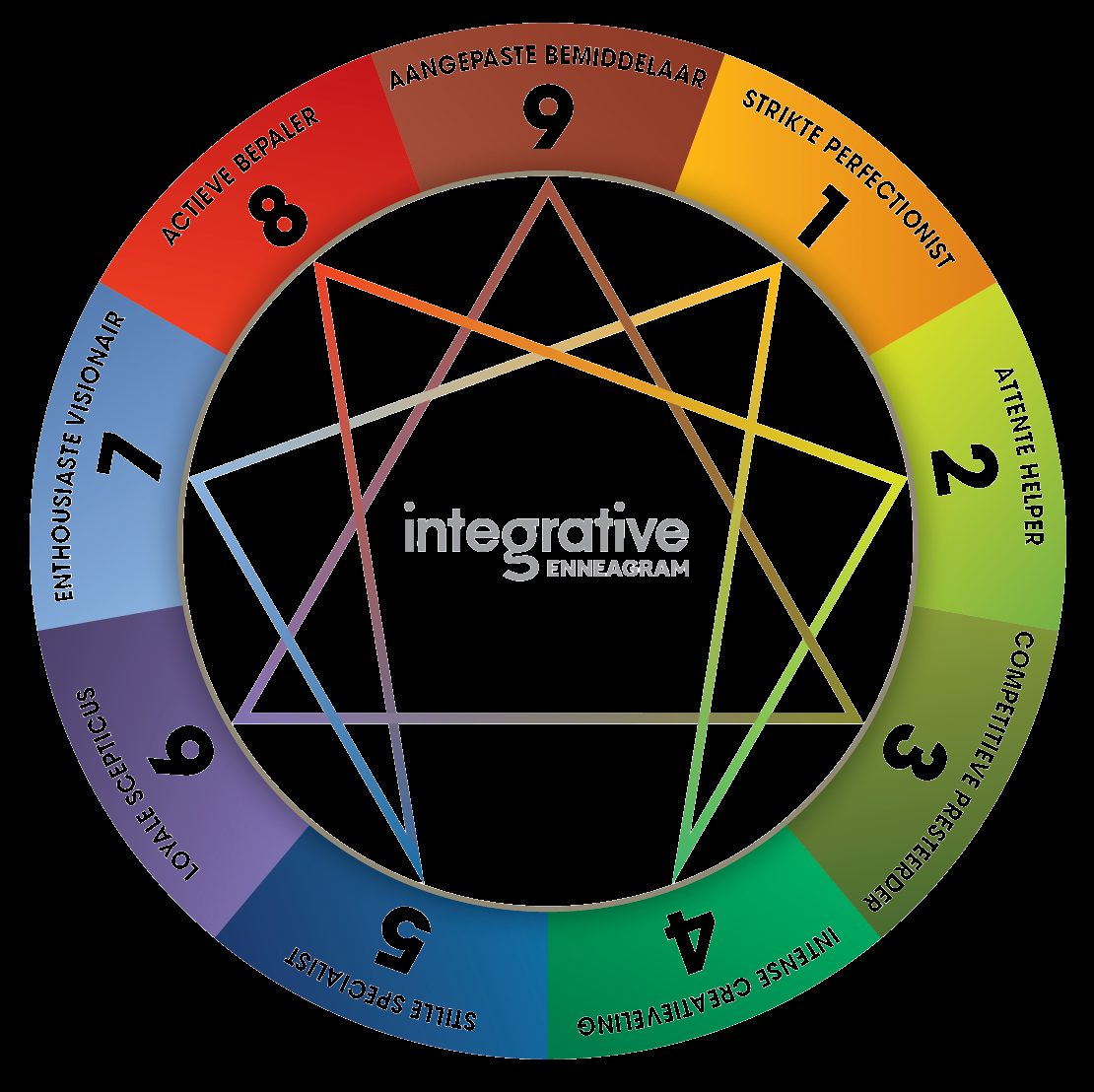
The Enneagram is a model that maps out the motivation, and therefore the paradigms, from which we look at the world. Awareness of this is the first step towards leaving the well-trodden paths that keep you stuck, and making new choices that serve you better.
How do you train your brain to create new neurological programmes?
‘Creating’ new neurological connections -neuroplasticity- happens mainly through repetition. Think of it as building blocks in your head. Every time you repeat something, you build a street; those streets can become roads, and with enough repetition these roads become motorways. If the imprint is very strong, we can even speak of ‘super highways’.
According to science, there are seven important elements. I'll list them and highlight two of them, Choices and Focus:
Mindfulness
Choices
Intention
Focus
Repetition
Emotion
Belief
Making choices
If your brain continually renews itself and rewrites the programmes by which you live your life, you had better choose carefully what you tell your brain. That can amount to both conscious and unconscious choices. With conscious choices, you have thought it through beforehand. Yet unconscious choices are sometimes more important than conscious ones, because they are often the smaller building blocks that form the bigger whole.
Your genes work like ‘switches’: they are turned off or on by your perception of your environment, in this case by your thoughts.
Research shows that all these building blocks in your brain ensure that you have already decided before you consciously ‘know’ the answer. This is sometimes called the ‘silent controller’. That means your brain knows the answer to your choice before you do. Disturbingly, this also means you often make decisions based on ‘wrongly’ programmed connections. 77% of your neurological programmes are incorrect, unproductive, dangerous or can even work against you. For the average person, this means that three quarters of what is stored in their head and helps determine how they stand in life is not beneficial.
So however small the choice, become more aware of the choices you make. All too often we are led by external influences: friends, family, media, Facebook, television, and so on. Looking at your options mindfully is the message. At least, if you want to be at the wheel of your own life.
A clear focus
This is essential: the clearer the goal you have in view, the easier it is for your brain to assist you. Vague thoughts lead nowhere. Visualisation is a way of making things clear to your brain. A clear image is real to your brain and strengthens the creation of the imprint you want.
In an experiment in which participants learned to play the piano by visualising, compared with a group who did it for real, the result was astonishing. The group that visualised without actually sitting at the piano made the same progress as the other group.
Want to try it out? First write down what you want, or the question you are struggling with. Preferably by hand on paper. That takes more focus and also helps because it is more personal. It is important to describe everything in detail. The more detail, the clearer it is for your brain - which reads along.
If you want strong, clear imprints in your brain, it asks for your full focus. The success of the neurological connection you want depends on it. That is why successful people become completely absorbed in what they want to achieve. Only the result to be achieved gets their complete attention, even with bumps in the road. The more intense your focus on your goal, the better the imprints … success is neurological!
A professional Coach supports you in becoming who you are in essence
Naturally, all of the above is linked to professional coaching. Coaching is my profession, and I believe it is essential that we understand how our brain functions. Well-trained Coaches have enough tools at their disposal to catch the intended ‘aha moment’ of their clients and help bring about a mindshift.
And then? When the client returns to their normal habitat, how long does that ‘aha moment’ stick around? That depends on the strength of the new neurological connection. The stronger it is made, or the more the one that was already present at a subconscious level is reinforced, the more lasting the result.
It is estimated that we need five new neurological connections to ‘drown out’ an old one. That is precisely why real coaching is not an ordinary conversation ...
Which entrenched paths do you want to let go of in order to truly become who you can be?