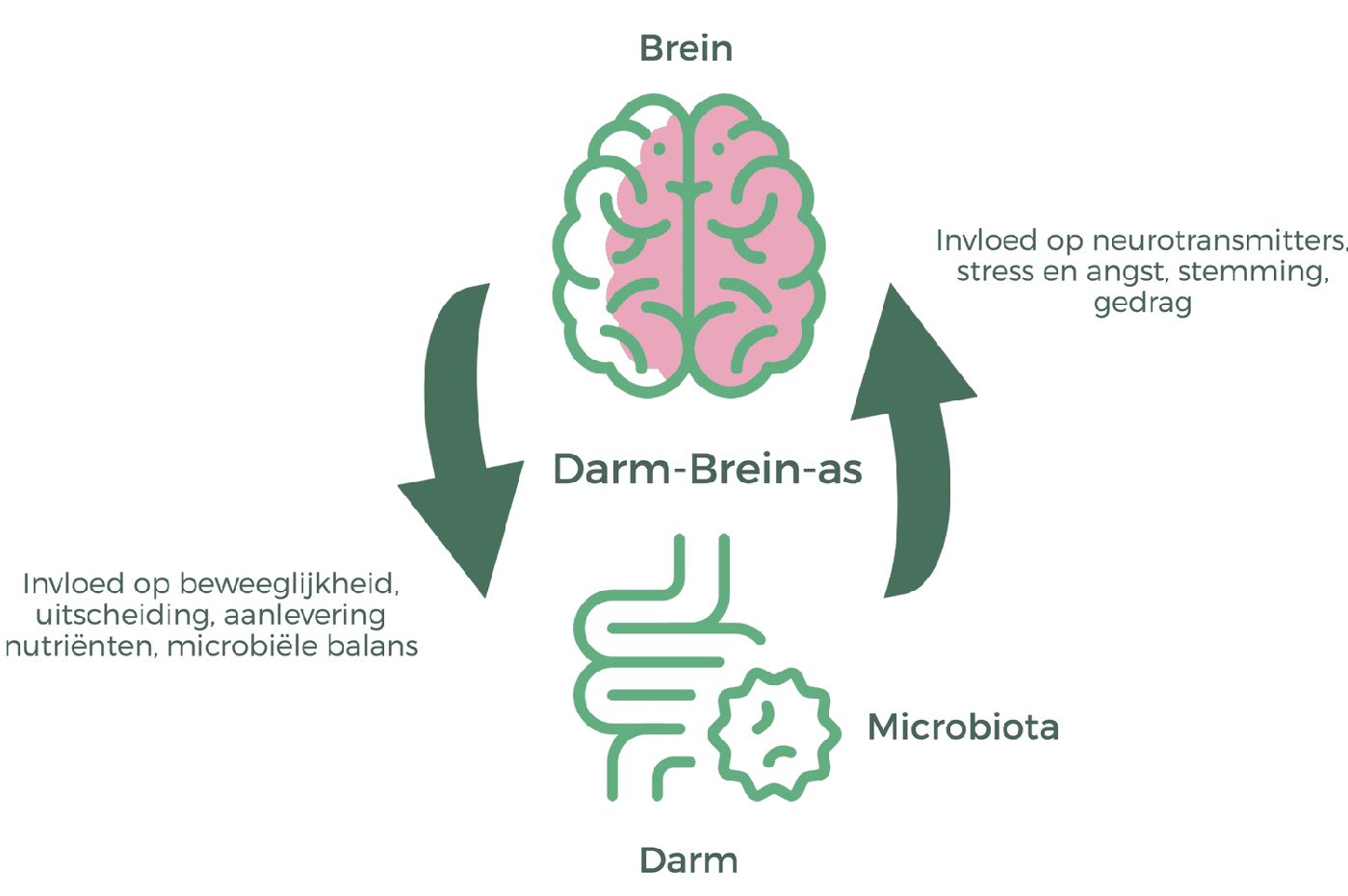

There is a link between what you eat and how you feel. Research today is focusing more than ever on the ‘Mind-Gut Connection’: the link between your mental and emotional wellbeing and your gut flora. Science therefore underlines the importance of a healthy gut flora, and one book after another is appearing on this fascinating theme. In this blog, a few astonishing insights:
Your gut makes up the bulk of your entire immune system
Your gut is your second brain and determines how good you feel
Your gut and brain are communicating with each other constantly
Your gut flora stores ‘stress triggers’ from babyhood that play a role in adulthood
Your gut flora influences your developed intuition and therefore your decisions
Your gut flora matters for how you stand emotionally in life
So: your gut tells you all sorts of things, but are you listening?
I have always wondered why the link between what you eat and how you stand in life mentally and emotionally is so rarely made in coaching – and certainly not in coach training. Body and mind are one; they are inextricably connected. Our ‘gut’ and our ‘mind’ communicate. So even if, as a professional coach, you work with your coachees on insights and changes: as long as the head sits on a faltering body, there is still a long way to go. For me, it is a matter of BOTH health AND mental resilience … And it all begins with the connection between your brain and your gut.
Scientifically, this theme is still in its infancy – it is only in the past 30 years that the focus has been placed on it. Yet there are by now enough validated studies and research papers to support a series of claims. I am happy to share a few of them as a nutrition and mental coach with a healthy interest in the human brain.
1 Your gut makes up the bulk of your entire immune system
As a warm-up, a few figures. Did you know that there are between 50 and 100 million nerve cells in your gut? That is as many as in your spinal cord. The immune cells of your gut are the largest part of your entire immune system. Your gut is home to as many as 100 trillion microbes that are perfectly capable of filtering out a ‘wrong bacterium’ and so keeping you healthy. Your ‘gut’ has capabilities that surpass all your other organs and even your brain.
2 Your gut is your second brain and determines how good you feel
Sensations you feel in your belly are stored in your brain. This happens at the subconscious level, although you can retrieve that memory, for example to relive the joy of a delicious meal.
However, not all our experiences are positive, so we store the negative experiences too. In other words: because of what happens in your gut, your brain receives signals that ‘influence’ how you feel. In our body, more than 90% of serotonin – involved in mood, emotions, sleep, memory, self-confidence, sexual activity and appetite – is produced in the digestive system. Eating well to feel good is therefore to be taken quite literally.
Conversely, your ‘gut’ mirrors every emotion that arises in your brain. When you feel stress, your heart – your third brain – beats faster and your neck and shoulder muscles tense up. When you are relaxed, the opposite happens. Your digestive system is, as it were, the theatre in which the drama of your emotions plays out, and it reflects how you feel.
Suppressed emotions are stored in the body and so cause physical symptoms. According to what he himself calls a ‘fair estimate’, Professor Jan Tack, a gastroenterologist at KU Leuven, says 1.3 million Belgians suffer from stomach and bowel complaints – such as Irritable Bowel Syndrome.
If you yourself suffer from IBS, constipation, indigestion, heartburn and the like, it is time to wake up ...
3 Your gut and brain are communicating with each other constantly
Is it our microbiota that influences us emotionally, or do signals from the brain influence the microbiota? Both are true.
The signals between your gut and brain travel in both directions through the Vagus Nerve, or wandering nerve, which is connected to, among other things, your stomach, liver, oesophagus, kidneys and lungs. The Vagus Nerve communicates continuously with your central nervous system about the state of these organs.
This internal ‘communication’ is sometimes called our ‘biochemical language’. Molecules such as peptides, cytokines and neurotransmitters pass on the appropriate information so that your digestive system deals accurately with what you have eaten. Or so that unwanted visitors are filtered out of your body. It also gives us that feeling of wellbeing after a good meal and lets us know when we are full.
Although all this seems perfectly obvious, it is fairly recent science. The reason is simple: in the last century we did not yet have the right DNA sequencing machines, and certainly not the supercomputers to process all the data collected.
4 Your gut flora stores ‘stress triggers’ from babyhood that play a role in adulthood
Our prefrontal cortex, the most recent part in the development of our brain, gives us the lifelong ability to ‘overrule’ the function of neurological connections and so learn new behaviour – this is called neuroplasticity. Thanks to Epigenetics, we also know that we have much more influence on the expression of our DNA than we previously thought. There are indeed ‘triggers’ in your DNA that can be switched on or off by your life circumstances.
Those triggers are passed on from your mother’s womb. If the pregnancy was experienced as stressful, these triggers can be passed on to the baby via the mother’s DNA. The birth itself also plays a role. Under normal circumstances, the newborn receives extra bacteria from the mother during birth.
Nowadays, more and more births in our Western world take place by caesarean section, so this important moment is missed. It then takes another three years or so before a child’s gut flora is fully developed. Negative influences can have a negative impact on your gut flora as you get older. The link to chronic illness is then quickly made and is being extensively studied by the medical world today.
5 Your gut flora influences your developed intuition and therefore your decisions
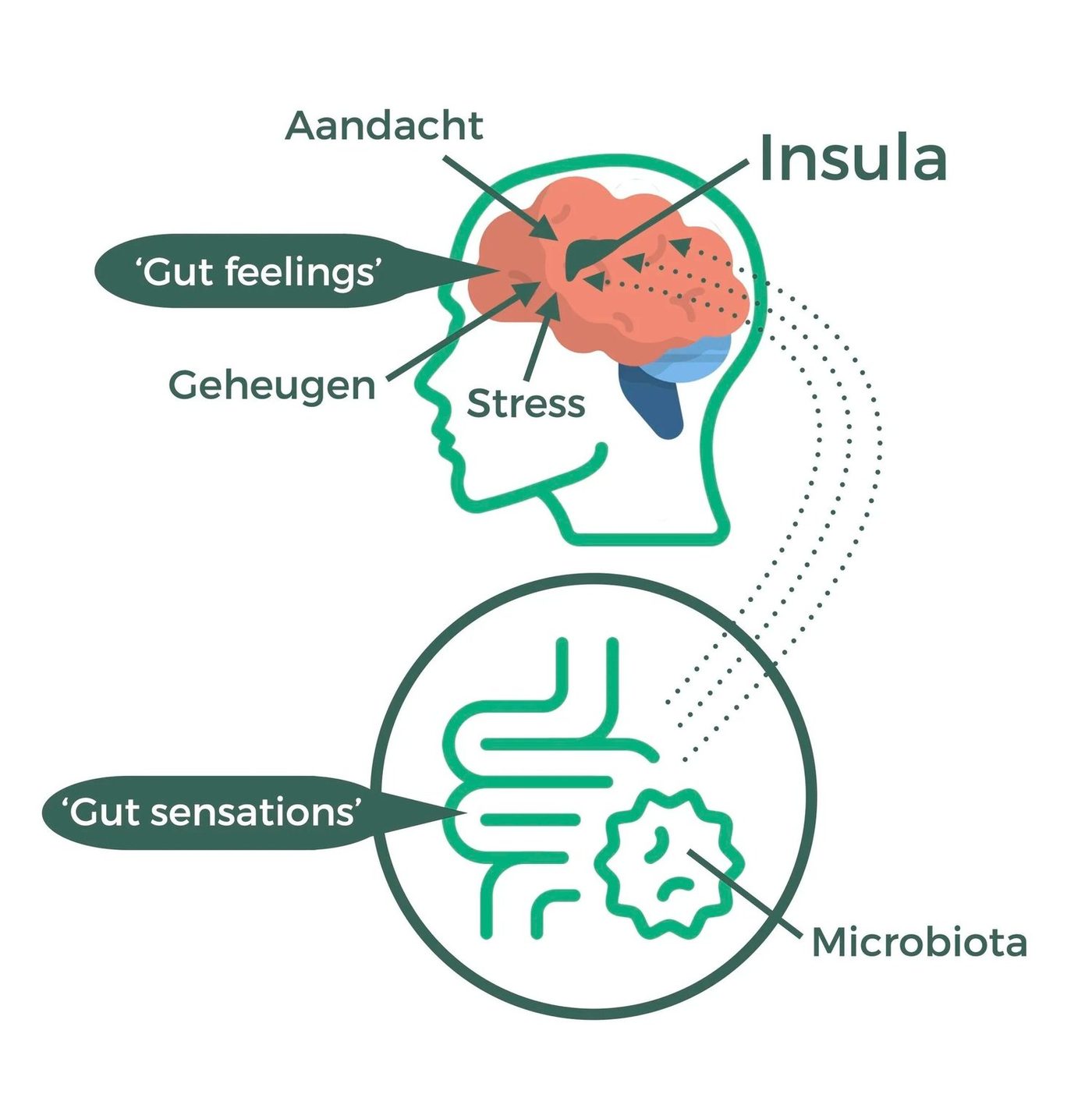
In the first phase of life, a baby learns unconsciously to survive. Hunger signals are ‘gut sensations’ in the digestive system. They evoke the very first positive and less positive ‘gut feelings’ in the baby’s brain, which expresses them emotionally as crying – its language. When the stomach is empty, the hormone ghrelin is released to create a feeling of hunger. If you let a baby cry when hungry, this experience is stored in the brain. These are therefore the baby’s first emotional experiences. Your very first stored ‘gut feelings’ will unconsciously serve as the model for ‘surviving’ in this world.
The insula, a brain region where sensory experiences are combined in an emotional context, plays a major role here. Our intuition cells, also known as Von Economo neurons or VENs, are located in this region of the brain. Intuition cells drive our ability to make predictions and decisions based on gut feeling. Studies suggest that we probably had 28,000 intuition cells at birth, 184,000 by the time we are four and 193,000 as adults. This makes us humans unique, because an adult ape usually has 7,000.
The insula influences basic emotions such as fear, anger, joy, surprise and sadness, and is even the only brain region that is active in disgust. The insula is also involved in empathy – being able to sympathise and feel with another person. It also plays a role in our choices about the people we spend time with and the way we critically assess information. Emotional awareness is also seated here – which determines, for example, to what extent you can experience yourself as a unique being.
What we feel in our belly therefore influences not only the decisions we make about what to eat and drink ...
6 Your gut flora matters for how you stand emotionally in life
Taking the previous five points into account, it is more than clear: standing strong emotionally in life is supported by keeping your gut flora healthy. And the reverse is also true: facing trauma, letting a coach guide you to ‘reprogram’ it and so working on your emotional wellbeing contributes to a healthier ‘gut’. Problems with your stomach or bowels, difficult bowel movements or irritable bowel are all indications that there is emotional work to be done.
Research shows that transferring faecal pellets containing gut bacteria from an extroverted mouse can change the behaviour of a timid mouse, causing the latter to behave more like the donor mouse. Transplanting the stool and microbes of an obese mouse with a voracious appetite can make a lean mouse susceptible to voracious overeating. Today ‘Fecal microbiota transplantation (FMT)’ is already being used to improve the gut flora of patients with chronic conditions such as Crohn’s disease, IBS and chronic constipation.
But perhaps you prefer these tips: a wholesome plant-based diet and fermented foods such as kimchi, sauerkraut, miso, yoghurts or probiotics in capsules – for example lactobacilli and bifidobacteria – support your gut flora … and so your mental and emotional wellbeing.
You choose ....
Closing thought
Imagine the following scenario: a Western man of around 50 is a manager in a large organisation. He makes important decisions every day, which brings quite a lot of stress. Our man likes eating meat. That meat is no longer the same meat our grandparents ate: it is too fatty and treated with all sorts of rubbish – both while the animal was being raised and afterwards. Our man has had trouble with his digestive system for years (IBS, heartburn, ...): a warning that something had better change, because this scenario will eventually lead to chronic problems. Yet the man chooses to take medication and antacids for his problems. To what extent are this man’s decisions negatively influenced by what is going on in his gut? What would be the effect of a healthy gut flora on the quality of his decisions?
Fascinating, isn’t it?
We know that the microbes in our gut influence our emotions and intuition and therefore also our decisions. Does that mean that if your gut flora is of poorer quality, your decisions will be too? Would you suddenly make better-quality decisions after a ‘stool transplant’ that provides a perfectly healthy gut flora?
Interesting questions that deserve our attention in the near future.
What we eat, our environment, antibiotics, medication, alcohol and drugs all play a part in developing and sharpening our emotion-generated circuits. A well-balanced diet combined with sufficient exercise and mental rest is the cocktail for leading a long and active life. It is never too late to change that – your brain is plastic, your DNA can change, remember?
So: what is your next step, however small, to take this into account?
Take up the challenge to improve your mental and emotional wellbeing
Email steve@jebentwatjeeet.be, call or WhatsApp 0032 487 42 76 72 for your free intake conversation
Steve Dewindt - Professional Coach and owner of Je Bent Wat Je Eet
Interesting literature on this theme:
EMERAN MAYER - ‘THE MIND-GUT CONNECTION: HOW THE HIDDEN CONVERSATION WITHIN OUR BODIES IMPACTS OUR MOOD, OUR CHOICES, AND OUR OVERALL HEALTH’
JUSTIN SONNENBURG (AUTHOR), ERICA SONNENBURG - THE GOOD GUT: TAKING CONTROL OF YOUR WEIGHT, YOUR MOOD, AND YOUR LONG-TERM HEALTH

Human humility
There are 100,000 times more microbes in your gut than there are people on earth.
Your personal ‘microbiota’ or ‘microbiome’ – the whole of micro-organisms such as bacteria, viruses and yeasts – can consist of as many as 1,000 different species, although 99% is made up of 30 to 40 of the same species.
Each species contains over 7 million genes. For every human gene, there are 360 microbial genes in your digestive system – less than 1% of your genes are of human origin.
Only about 10% of the cells in or on a human being are actually human.
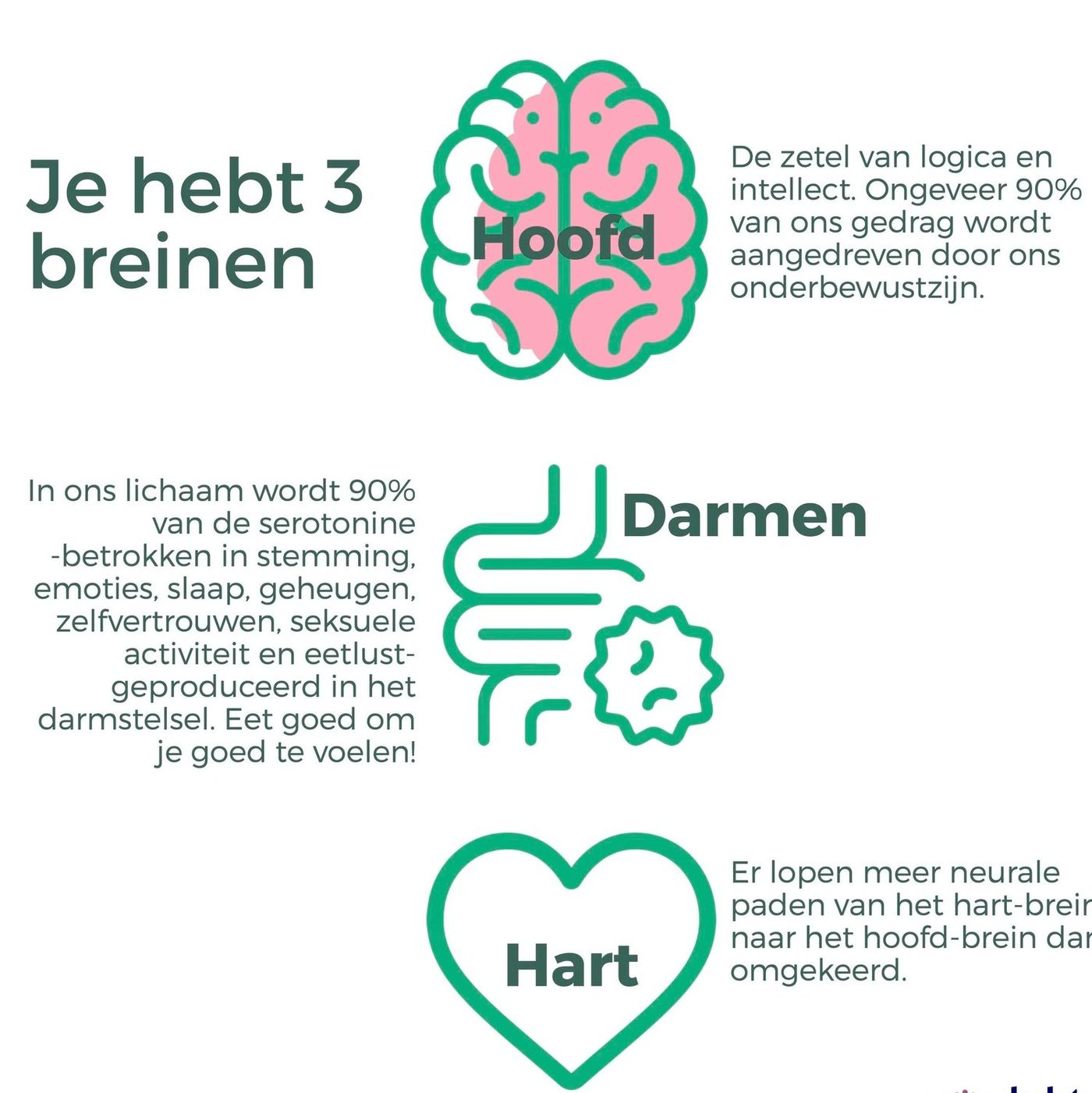
In our society, the emphasis has until now been placed on IQ (Intelligence Quotient), which refers to the head-brain.
Today we know that we have three brains, and therefore three intelligence centres. Alongside IQ, we should attach (at least) as much importance to our EQ (emotional quotient) and GQ (gut quotient).
3 x Intelligence
The three intelligence centres are a concept used in the Enneagram, a model that describes 9 personality types based on their core motivation.
In every Enneagram type, patterns can also be recognised in eating habits.